I Miss You in Morse Code – Full Translation + Copy Paste
If you’re looking for the correct way to write “I miss you” in Morse code, the official International Morse Code translation is:
.. / — .. … … / -.– — ..-
Each word is created by translating its individual letters into dots (•) and dashes (–). When written with the correct spacing, this is the internationally recognized way to encode the phrase for learning, communication, artwork, personalized gifts, and creative projects.
Whether you want to send a hidden message to someone special, create a Morse code bracelet, verify a tattoo design, or simply learn how the phrase is written, this guide covers the correct translation and spacing rules, common mistakes, and real-world uses.Use our free Morse code translator to convert any phrase instantly.
Quick Facts
Property | Details |
|---|---|
Phrase | I Miss You |
Standard | International Morse Code |
Words | 3 |
Letters | 9 |
Difficulty | Beginner |
Common Uses | Gifts, jewelry, tattoos, greeting cards, hidden messages |

[ez-toc]
“I miss you” in Morse code is the English phrase converted into International Morse Code, where every letter has its own unique combination of dots and dashes.
Unlike a spoken language, Morse code doesn’t assign a symbol to an entire word. Instead, each letter is encoded separately and then combined using standardized spacing rules. This approach makes Morse code reliable across different communication methods, including radio transmissions, flashing lights, sound signals, and tapping.
The phrase is written as:
When combined correctly:
.. — .. … … -.– — ..-
If you’re interested in understanding how every letter works, the Morse Code alphabet explains the complete character set, including numbers and punctuation.
Did you know? Morse code doesn’t translate words directly. Every letter is encoded individually before forming complete words and sentences.
International Morse Code vs. American Morse Code
Although many people simply say “Morse code,” there are actually two historical systems.
International Morse Code | American Morse Code |
|---|---|
Global standard used today | Historical telegraph system |
Used in aviation, maritime, and amateur radio | Rarely used outside historical demonstrations |
Consistent timing and spacing | More complex timing patterns |
Recommended for learning | Not recommended for beginners |
This page uses International Morse Code, the standard found in modern references and learning materials.
Writing the phrase correctly involves more than copying dots and dashes. Correct spacing matters just as much, because Morse code relies on timing as well as symbols.
Follow these steps:
- Translate each letter individually.
- Keep the symbols for each letter together.
- Leave a short gap between letters.
- Leave a larger gap between words.
The official timing rules:
Element | Duration |
|---|---|
Dot | 1 unit |
Dash | 3 units |
Gap between parts of the same letter | 1 unit |
Gap between letters | 3 units |
Gap between words | 7 units |
These timing standards are recognized worldwide and ensure Morse code stays accurate whether it’s written, played as audio, flashed with light, or transmitted by radio.
Pro Tip: Many mistakes happen because people copy the dots and dashes correctly but ignore the spacing. Always check both the symbols and the gaps before using Morse code for a tattoo, engraving, or personalized gift.
How to Read “I Miss You” in Morse Code
Reading Morse code becomes much easier when you break the phrase into smaller parts instead of trying to recognize the entire message at once.
Start with the first word: .. = I
Then the second word: — = M, .. = I, … = S, … = S
Finally the last word: -.– = Y, — = O, ..- = U
Learning one word at a time helps beginners recognize patterns more quickly and reduces common decoding mistakes.
If you’re practicing multiple expressions, the Morse Code Words page includes additional examples that build on the same alphabet without repeating the fundamentals.
Letter | Morse Code | How to Remember | Explain |
|---|---|---|---|
I | .. | Two short dots | Adding a third dot |
M | — | Two long dashes | Mixing a dash with a dot |
I | .. | Repeat the first letter | Missing one dot |
S | … | Three short dots | Uneven spacing |
S | … | Same as above | Joining it with the next letter |
Y | -.– | Dash, dot, dash, dash | Reversing the sequence |
O | — | Three long dashes | Making the dashes too short |
U | ..- | Two dots followed by one dash | Forgetting the final dash |
As you practice, read one word at a time instead of the full phrase. This improves recognition and reduces errors, especially if you’re just starting to learn Morse code.
Incorrect Letter Spacing
Each Morse code character must remain separate. Combining letters together makes the message difficult to decode. Keep the symbols for each letter together, leave a gap between letters, and leave a larger gap between words.
Mixing Dots and Dashes
Each symbol has a fixed meaning. A single missing dot or an extra dash creates a different letter. Before using Morse code for a tattoo, engraving, or artwork, compare every character with the Morse Code alphabet.
Using Unofficial Morse Code Charts
Not every chart shared on social media is accurate. Some graphics change spacing or simplify characters for design purposes. For learning and permanent projects, always use the International Morse Code standard rather than decorative versions.
Ignoring Timing
Morse code isn’t just visual it’s rhythmic. Use the timing chart above as your reference whenever you’re sending the message by sound, light, or tapping; consistent gaps are what let someone else decode the rhythm correctly. The most common timing mistake isn’t getting a dot or dash wrong it’s rushing the word gap, which causes “I” to run straight into “MISS” with no audible break between them.
This phrase is popular because it combines a meaningful message with a discreet design. Rather than writing the words directly, the dots and dashes create a personal message that only someone familiar with Morse code can immediately recognize — which is part of why it shows up so often in long-distance relationships, anniversary gifts, and memorial keepsakes.
Common formats include:
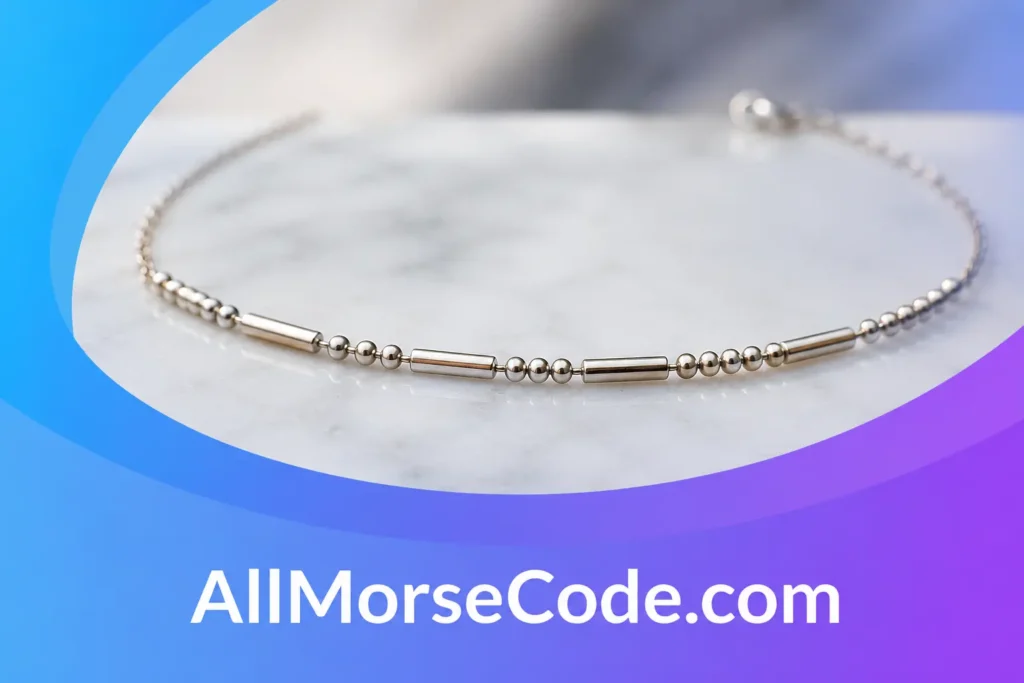
Because the message is compact and visually simple, it works well on both printed and engraved items.If you find this phrase in an image or screenshot use our Morse code image translator to verify it instantly.
Can You Use “I Miss You” in Morse Code for Tattoos?
Yes. Morse code tattoos have become increasingly popular because they let people carry a meaningful phrase without displaying it in plain text.
Before choosing a tattoo, follow these best practices:
Remember that tattoo artists reproduce the design you provide — they don’t verify Morse code accuracy. Reviewing the translation beforehand can prevent a permanent mistake. Other popular Morse code tattoo phrases include SOS in Morse code and hello in Morse code.
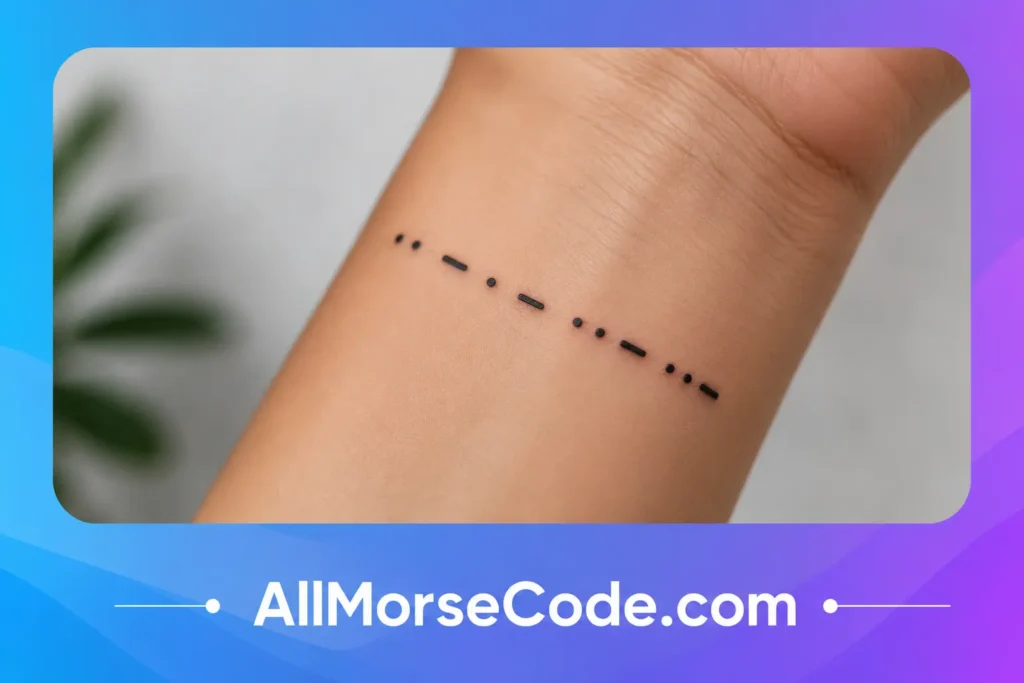
If you’re looking for another meaningful phrase, I Love You in Morse Code is another popular choice for couples and family members.
“I Miss You So Much” in Morse Code
Some users want to express stronger emotion by extending the original phrase. Instead of replacing the original translation, simply add the Morse code for “so much” after “I miss you.” This variation is often used in handwritten notes, anniversary cards, and long-distance relationship gifts. Because it’s an extension of the original phrase, verify each additional word separately before combining the message.
“I Miss You Too” in Morse Code
“I miss you too” is another frequently searched variation, commonly used as a reply. The writing rules stay the same: translate each letter individually, keep proper spacing, and verify the completed phrase before sharing or engraving it. Once you’ve learned the original phrase, adding a short reply like this becomes much easier because you’re already familiar with most of the Morse alphabet.
Learning Morse code doesn’t require memorizing hundreds of symbols at once. Breaking the phrase into smaller pieces makes it much easier to remember.
Day | Practice |
|---|---|
Day 1 | Learn the letters I, M, S, Y, O, and U |
Day 2 | Practice each word separately: I, MISS, YOU |
Day 3 | Combine all three words while following the official spacing rules |
Day 4 | Test yourself without looking at the letter chart |
Practicing just a few minutes each day is usually more effective than trying to memorize everything in one session.
Although many people know Morse code from movies and emergency signals, its history dates back to the 1830s, when Samuel Morse and Alfred Vail developed a system for sending messages over the electric telegraph. Instead of transmitting spoken words, each letter was represented by a unique sequence of short and long electrical pulses. For a complete beginner overview read our guide on what is Morse code.
Over time, the original system evolved into International Morse Code, which became the worldwide standard for radio communication, maritime navigation, aviation, and amateur radio. Today, Morse code is still used by radio enthusiasts, emergency communication groups, historians, and hobbyists, while many people enjoy it as a creative way to personalize gifts, artwork, jewelry, and hidden messages.
Phrase | Best Used For | Difficulty |
|---|---|---|
Starting a conversation | Easy | |
Casual greetings | Very Easy | |
Romantic messages | Easy | |
Positive replies | Very Easy | |
Negative replies | Very Easy | |
Emergency communication | Easy | |
Birthday wishes, greeting cards, gifts | Medium | |
Daily greetings, morning texts | Easy | |
Easy | ||
Calling any station | Easy |
If you’re new to Morse code, these pages provide a natural progression from simple greetings to more meaningful expressions.
“I miss you” is one of the most meaningful phrases you can write in Morse code because it combines a simple message with a timeless communication system. Whether you’re creating a personalized gift, designing a tattoo, learning the Morse alphabet, or sending a thoughtful hidden message, understanding the correct translation, spacing, and timing ensures your message is both accurate and meaningful. As you become more comfortable reading and writing Morse code, continue practicing with other common phrases to strengthen your skills and gain confidence using the International Morse Code standard.

Steve Johson
Founder of AllMorseCode.com and creator of educational Morse code resources used by learners worldwide. Specializes in Morse code translation, signal encoding concepts, communication history, and practical learning methods. Publishes in-depth guides, reference materials, and interactive tools that make Morse code simple, accurate, and accessible for students, amateur radio enthusiasts, emergency preparedness learners, and everyday users.