No in Morse Code (-. —): Meaning, Examples & How to Send It
You know how to say “no” in English, Spanish, or French — but what about in Morse code? Most beginners jump straight into memorizing the full alphabet, get overwhelmed, and quit before they ever send a single word. Starting with short, common words is the smarter approach, and “no” is one of the best places to begin.
This guide covers everything you need: what “no” looks like in Morse code, how to decode it, how it sounds as audio, and how to send it using a flashlight or radio with practice examples included so you can test yourself along the way.
[ez-toc]
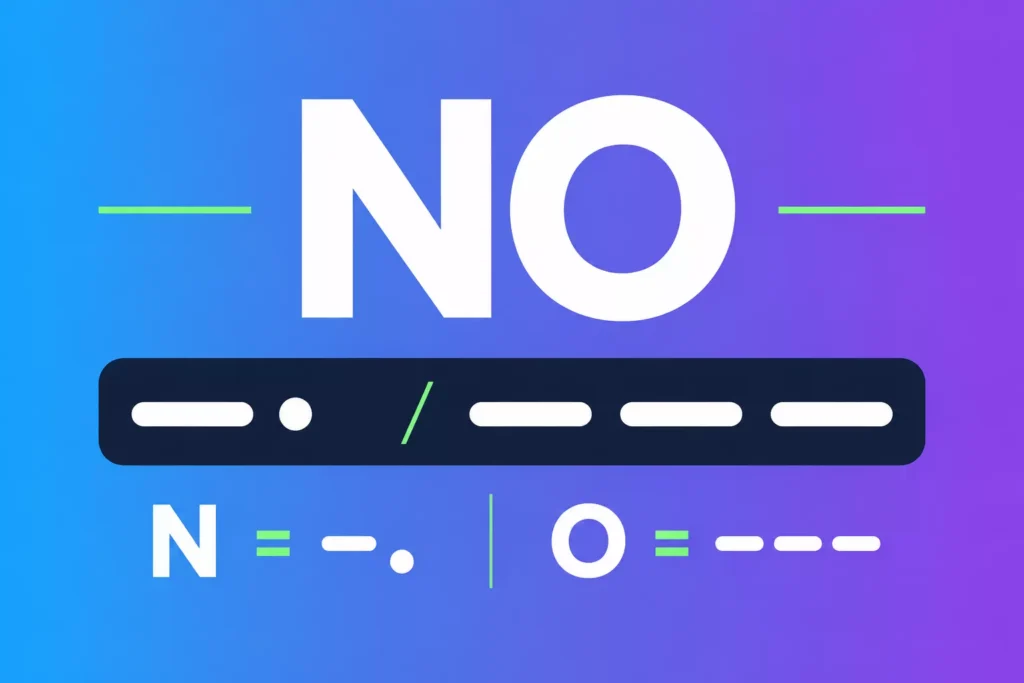
No in Morse code is:
-. —
The word consists of two letters:
When combined, they form the Morse code sequence for the word “no.”
Character | Morse Code |
|---|---|
N | -. |
O | — |
No | -. — |
If you’re new to Morse communication, start with Morse code to learn the basic symbols and timing rules.
What Does No Mean in Morse Code?
In Morse code, the word “no” has the same meaning it does in everyday English. It is used to indicate a negative response, refusal, rejection, or disagreement.
Examples:
The Morse symbols themselves do not change the meaning of the word. They simply provide a way to transmit it through sound, light, or radio signals.
No in Morse Code to English
If you see the Morse code sequence:
-. —
the English translation is:
No
This is a simple example of decoding Morse code back into plain text. Because the word contains only two letters, it is often used by beginners when practicing Morse code translation.
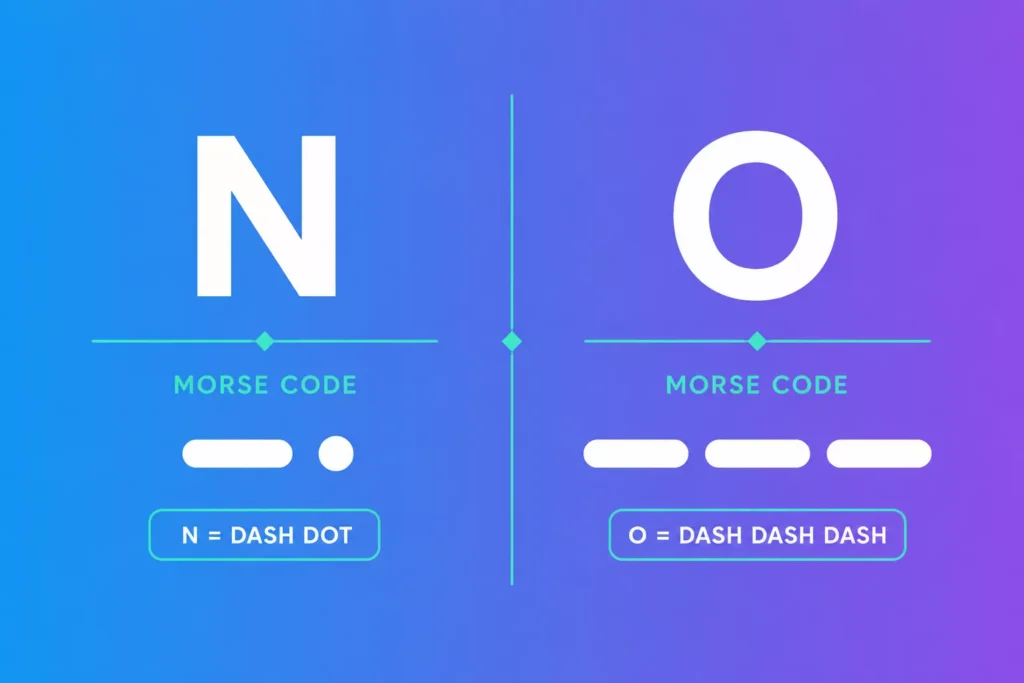
The word “no” is formed by combining the Morse code symbols for the letters N and O.
Morse Code for the Letter N
The letter N is represented by:
-.
This pattern contains:
A simple way to remember N is:
Dash → Dot
Morse Code for the Letter O
The letter O is represented by:
—
This pattern contains three dashes, making it one of the easiest Morse code letters to recognize.
Combining N and O
When combined:
N = -.
O = —
No = -. —
A short pause separates the letters during transmission.
Why Is No Written as -. — in Morse Code?
Morse code assigns a unique sequence of dots and dashes to every letter.
For the word “no”:
Combining those letters creates the Morse code representation of the word.
The Morse code system was originally developed by Samuel Morse and Alfred Vail during the 1830s and 1840s for use with the telegraph. Over time, the system evolved into International Morse Code, which standardized the symbols used around the world today.
For a complete explanation of Morse code symbols and structure, visit Morse code.
One of the best ways to learn Morse code is through repetition. Try reading the examples below before looking at the answers.
Example 1
-. —
Answer:
No
Example 2
-. — / -. —
Answer:
No No
Example 3
-. — / -.– . …
Answer:
No Yes
Once you’re comfortable reading short words, try decoding hello in morse code or hi in morse code to improve your recognition skills.
Once you know the pattern, you can send “no” using audio, visual, or radio signals. You can also use our free Morse code
translator to convert any word instantly.
Morse Element | Duration |
|---|---|
Dot | 1 unit |
Dash | 3 units |
Gap Between Parts of a Letter | 1 unit |
Gap Between Letters | 3 units |
Gap Between Words | 7 units |
What Does No in Morse Code Sound Like?
When transmitted as audio:
N = Dash Dot
O = Dash Dash Dash
A learner might hear it as:
DAH DIT | DAH DAH DAH
The pause separates the two letters.
If your website later includes a Morse code audio tool or player, this is an ideal place to let visitors hear the sequence.
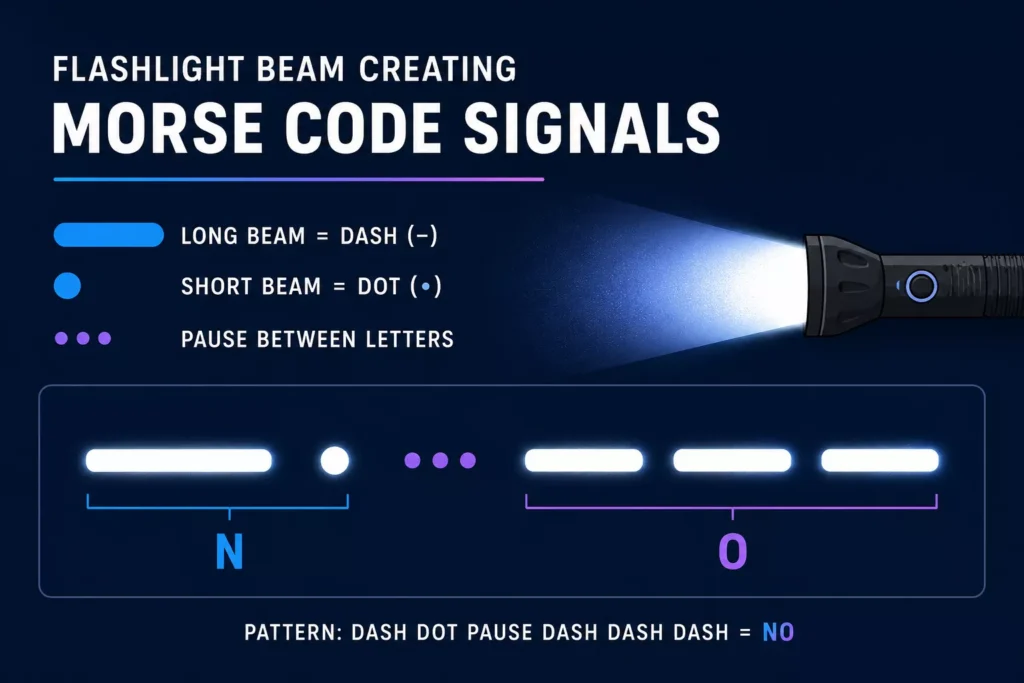
Using a Flashlight
Morse code can also be transmitted using light signals.
For the word “no”:
Sequence:
Long Flash
Short Flash
Pause
Long Flash
Long Flash
Long Flash
Although flashlight signaling is less common today, the same principle is still used in visual communication training and emergency signaling scenarios.
Using Radio Communication
Morse code remains popular among amateur radio operators and communication enthusiasts.
When transmitting “no” over radio, the sender uses:
-. —
Proper timing is important because changing a dot or dash can completely alter the message.
The words “yes” and “no” are among the most common responses in Morse communication.
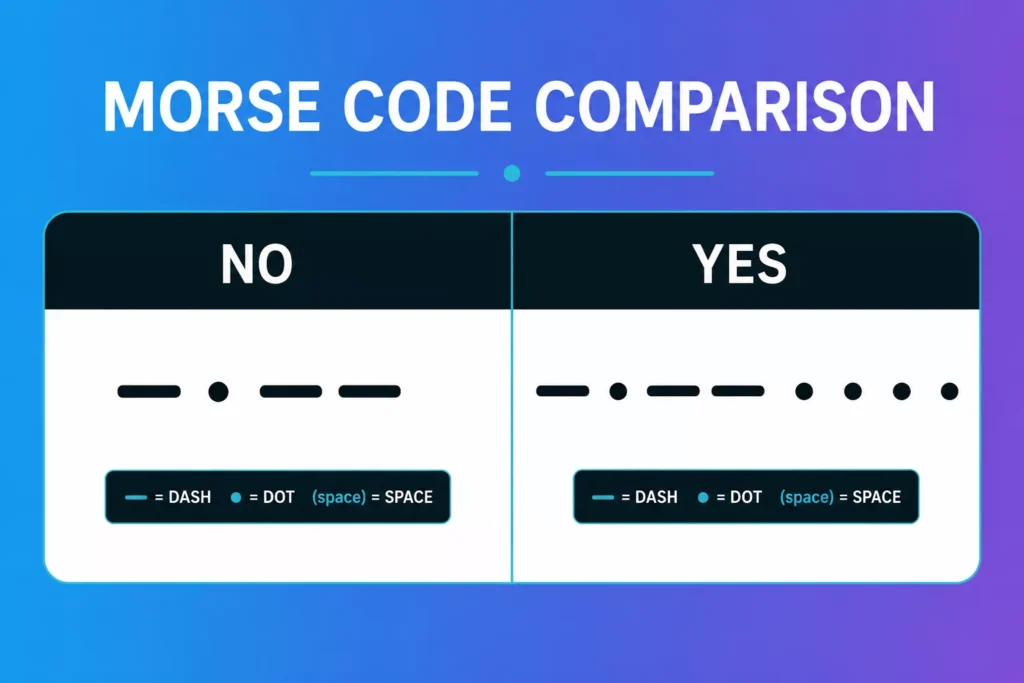
Word | Morse Code |
|---|---|
No | -. — |
Yes | -.– . … |
Although they serve opposite purposes, their Morse code patterns are completely different.
You can learn the full sequence on the yes in morse code page.
Even a small mistake can completely change a Morse code message.
Mistake 1: Reversing the Letters
Incorrect:
— -.
Correct:
-. —
Reversing the order changes the sequence and can confuse the receiver.
Mistake 2: Missing the Letter Gap
A short pause should separate N and O.
Without proper spacing, the sequence can become difficult to decode accurately.
Mistake 3: Adding Extra Dots or Dashes
For example:
-. —-
is not the same as:
-. —
A single extra dash changes the pattern and may be interpreted as a different character sequence.
Always double-check:
N = -.
O = —
before sending the word.
Many beginners learn greetings and responses before moving on to longer phrases.
You may also enjoy:
No in Morse code is written as -. —, using the letters N (-.) and O (—). While it is a simple word, learning how to read, write, and send it is a great introduction to Morse communication. As you continue learning, explore Morse code, yes in morse code, and other common Morse code words to build your skills and recognize patterns more quickly.

Steve Johnson
Founder of AllMorseCode.com and creator of educational Morse code resources used by learners worldwide. Specializes in Morse code translation, signal encoding concepts, communication history, and practical learning methods. Publishes in-depth guides, reference materials, and interactive tools that make Morse code simple, accurate, and accessible for students, amateur radio enthusiasts, emergency preparedness learners, and everyday users.