Morse Code in Anime: Hidden Messages, Famous Examples, and Their Meanings
Have you ever noticed a pattern of dots and dashes hidden in an anime episode? Those symbols are often real Morse code messages placed by creators as hidden clues, emergency signals, or clever Easter eggs. While many viewers overlook them, attentive fans have uncovered secret warnings, emotional messages, and plot hints hidden in books, flashing lights, songs, and background scenes.
One of the most famous examples appears in The Promised Neverland, where William Minerva leaves coded messages that help the children uncover the truth and plan their escape. Other series, including Weathering with You, Kizumonogatari, and Firefighter Daigo: Rescuer in Orange, also include Morse code in different ways.
In this guide, you’ll discover which anime feature Morse code, what the hidden messages mean, and how you can decode similar clues yourself using our Morse Code Translator .
Quick Answer
Morse code appears in several anime as a storytelling tool, hidden Easter egg, or emergency signal. The best-known example is The Promised Neverland, where William Minerva hides encoded messages to guide the children. Other notable examples include Weathering with You, Kizumonogatari, and Firefighter Daigo: Rescuer in Orange. If you spot dots and dashes in an anime, you can decode them using an online Morse code translator.
[ez-toc]
Anime creators use Morse code to reward observant viewers with hidden details that aren’t obvious during a first watch. These coded messages can hint at future events, warn characters about danger, or quietly reveal information that becomes important later in the story. This approach adds another layer of storytelling without interrupting the main plot.
Unlike spoken dialogue, Morse code invites fans to pause, investigate, and decode the message themselves. That sense of discovery is one reason hidden codes remain popular in mystery, psychological, and science fiction anime.
If you’re unfamiliar with how dots and dashes work, our guide to Morse Code explains the writing system, while Morse Code Words shows common words and phrases you may come across while decoding anime clues.
Great. This is the section that will determine whether the article outperforms the current search results. Instead of simply listing anime, we’ll explain where the Morse code appears, what it means, and why it matters to the story.
Several anime include Morse code as a hidden storytelling element, but they don’t all use it the same way. Some hide messages in books or signs, while others use flashing lights or audio signals to reward observant viewers. Below are the most well-known examples and the role Morse code plays in each series.
The Promised Neverland
If there’s one anime closely linked to Morse code, it’s The Promised Neverland. Throughout the series, William Minerva leaves hidden messages inside books and bookplates that help the children uncover the truth about Grace Field House. Instead of giving direct instructions, he uses Morse code so only those who recognize the pattern can understand the warnings.
Some of the decoded messages include RUN, DOUBT, DANGER, and TRUTH. These aren’t random words. Each one points the children toward questioning their surroundings and planning their escape. The hidden messages became one of the series’ most memorable mysteries and encouraged fans to decode every clue they could find.
If you’d like to understand how words like these are written in Morse, explore our guide to Morse Code Words
Quick Fact
William Minerva’s coded messages are an official part of the story, making The Promised Neverland the best-known anime featuring Morse code.
Weathering with You
Makoto Shinkai’s Weathering with You includes a subtle Morse code Easter egg hidden in the song Grand Escape by RADWIMPS. Careful listeners noticed a sequence of beeps that translates to “It’ll be fine tomorrow.”
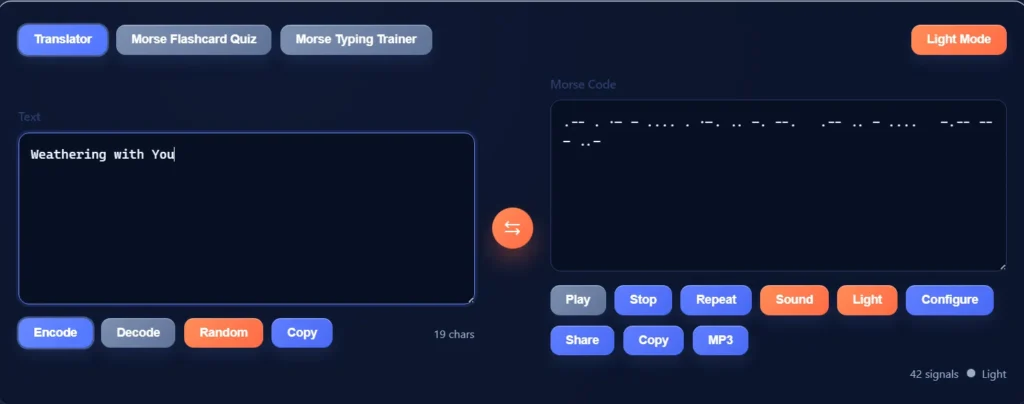
The message fits the film’s hopeful tone and adds another layer for fans who enjoy finding hidden details. Because it appears in the soundtrack rather than on screen, many viewers don’t notice it until it’s discussed by the anime community.
Kizumonogatari
At the beginning of Kizumonogatari Part 1: Tekketsu, blinking lights inside a subway station repeatedly signal SOS in Morse code. The distress signal matches the atmosphere of the opening scene and quietly reinforces that something is terribly wrong before the story fully unfolds.
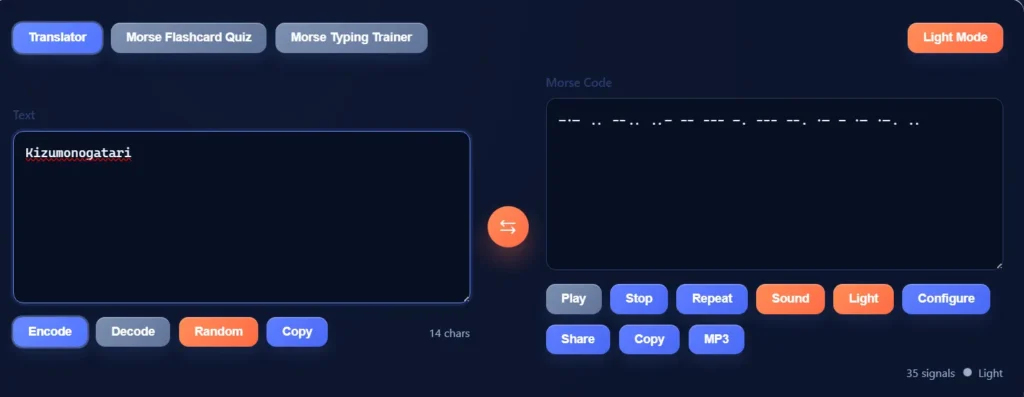
SOS is one of the most recognized Morse code signals in the world and is commonly used to request urgent help. If you’re curious about how this famous signal works, read our guide to SOS Morse Code .
Firefighter Daigo: Rescuer in Orange
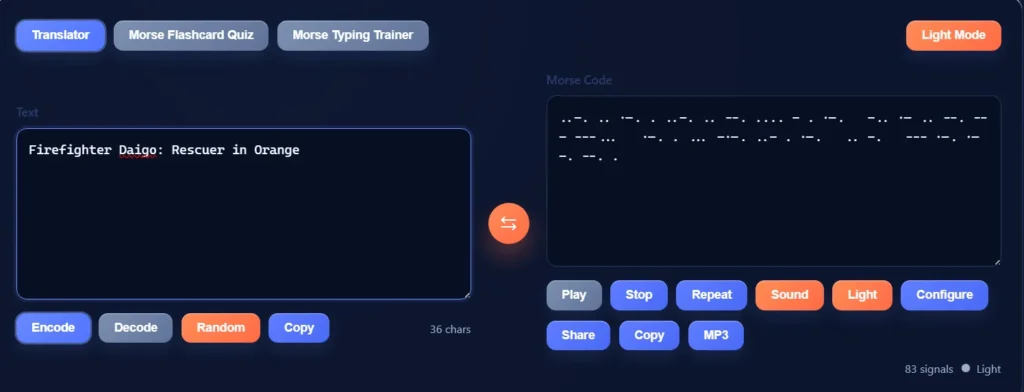
Episode 11 of Firefighter Daigo: Rescuer in Orange focuses on Morse code as an emergency communication method during a dangerous rescue. Unlike hidden Easter eggs found in other anime, this example shows Morse code being used as a practical tool when normal communication becomes difficult.
The scene highlights why Morse code is still taught in some emergency situations, especially when other forms of communication fail.
Spy × Family
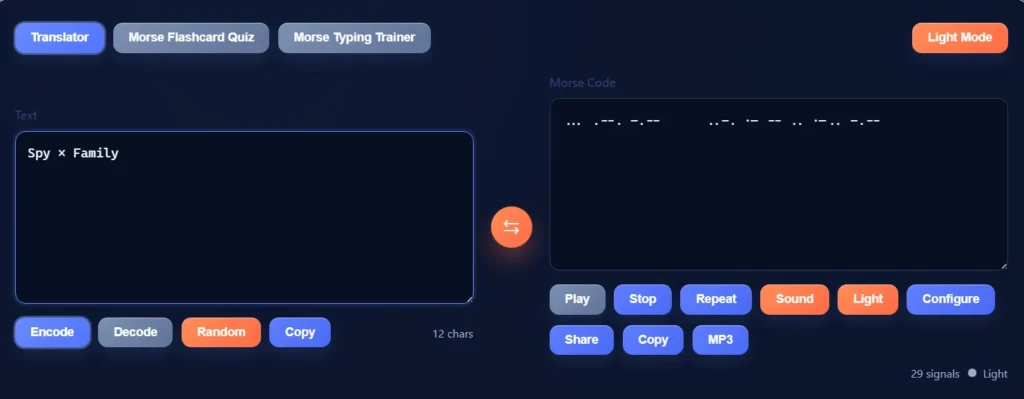
Some fans believe Spy × Family contains Morse code references during scenes involving Loid Forger’s spy missions. These discussions usually focus on silent communication and hidden signals that match the series’ espionage theme.
However, unlike The Promised Neverland, these examples have not been officially confirmed as intentional Morse code by the creators. They are best viewed as community observations rather than established facts.
Fact Check
✔ Verified: The Promised Neverland, Kizumonogatari, and Firefighter Daigo: Rescuer in Orange contain documented Morse code or Morse-based communication.
⚠ Community Reported: Some references in Spy × Family are based on fan discussions and should not be treated as official without confirmation.
| Anime | Where the Morse Code Appears | Purpose | Status |
| The Promised Neverland | Books and hidden messages | Guides the children’s escape | ✅ Verified |
| Weathering with You | Song “Grand Escape” | Hidden audio Easter egg | ✅ Reported |
| Kizumonogatari | Flashing station lights | SOS distress signal | ✅ Verified |
| Firefighter Daigo | Emergency rescue scene | Real-world communication | ✅ Verified |
| Spy × Family | Fan-observed scenes | Community interpretation | ⚠ Not officially confirmed |
The Morse code messages found in anime are more than random dots and dashes. Each one supports the story by warning characters, building suspense, or revealing hidden information. While some messages are direct, others leave room for viewers to connect the clues themselves.
Here’s what some of the best-known messages mean.
RUN
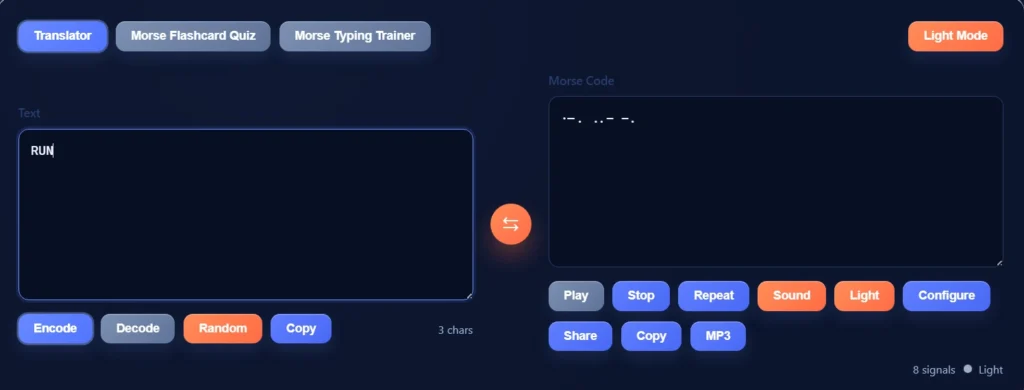
RUN is one of the most memorable Morse code messages in The Promised Neverland. It warns the children that staying at Grace Field House is dangerous and encourages them to escape before it’s too late.
Rather than revealing the truth openly, the hidden message lets viewers uncover the danger alongside the characters.
DOUBT
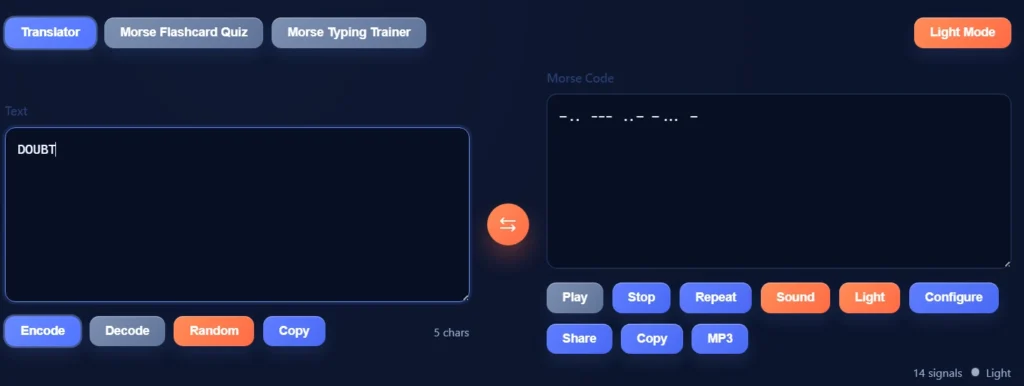
The message DOUBT tells the children not to trust everything around them. As the story unfolds, this warning becomes increasingly important because the orphanage is very different from what it first appears to be.
A single word creates tension without giving away the plot.
DANGER
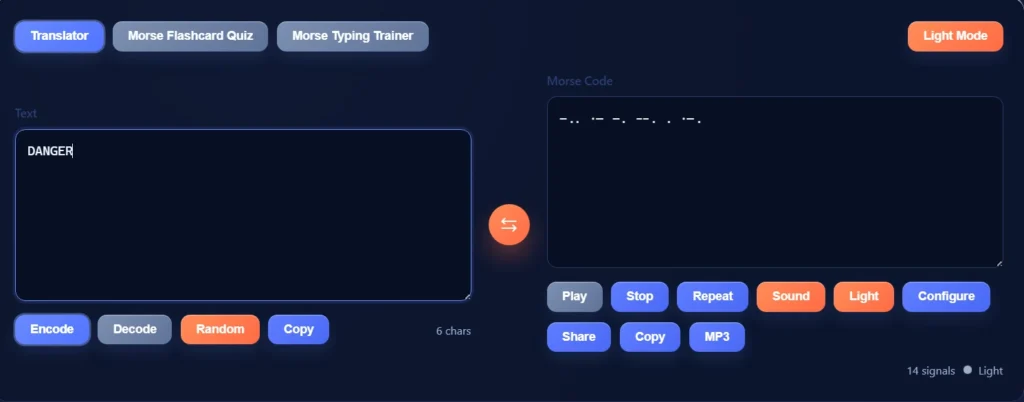
The word DANGER reinforces the constant threat surrounding the children. Instead of acting as a spoiler, it builds suspense and reminds viewers that every decision carries risk.
TRUTH
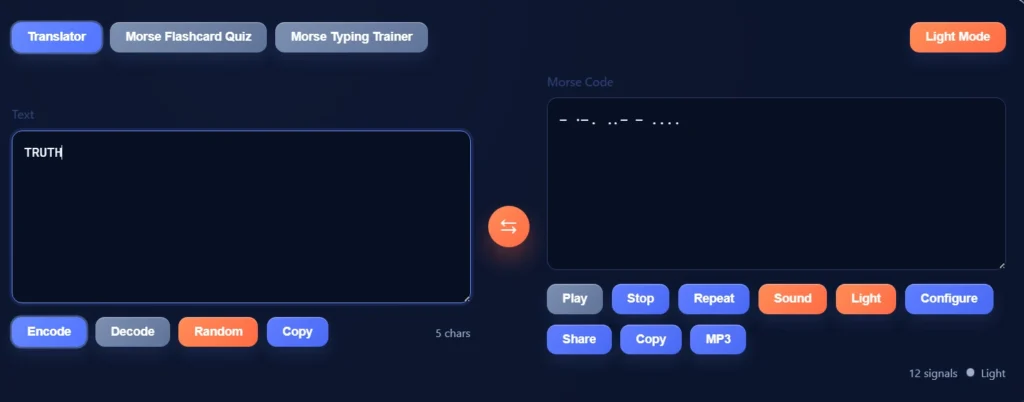
The hidden message TRUTH encourages the characters to keep searching for answers. It reflects one of the series’ central themes: questioning appearances instead of accepting them at face value.
SOS
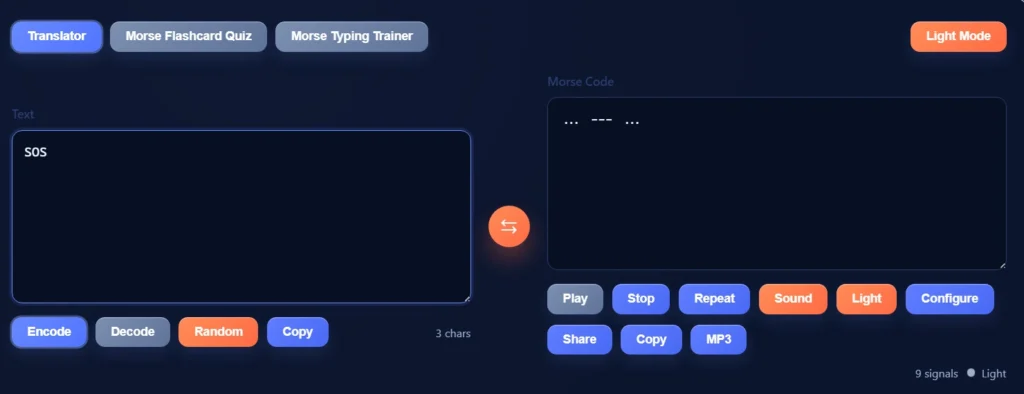
Unlike the previous examples, SOS is an internationally recognized distress signal. In Kizumonogatari, the flashing Morse code matches the tension of the opening scene and quietly signals that someone is in serious danger.
Want to learn why this signal is recognized around the world? Read our guide to SOS Morse Code .
“It’ll Be Fine Tomorrow”
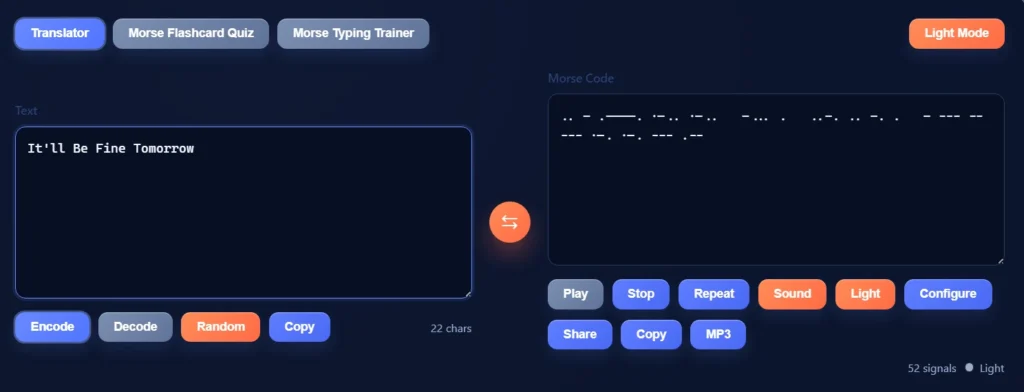
One of the most discussed audio Easter eggs appears in Weathering with You. Fans identified a hidden Morse code sequence in the song Grand Escape that translates to “It’ll be fine tomorrow.”
Whether viewers notice it during the film or discover it later, the message fits the movie’s hopeful ending and rewards attentive listeners.
| Morse Code Message | Anime | Meaning in the Story |
| RUN | The Promised Neverland | Escape before it’s too late |
| DOUBT | The Promised Neverland | Question what you believe |
| DANGER | The Promised Neverland | Warns of hidden threats |
| TRUTH | The Promised Neverland | Search for answers |
| SOS | Kizumonogatari | Universal distress signal |
| It’ll Be Fine Tomorrow | Weathering with You | Hidden message of hope |
Did You Know?
Most Morse code messages in anime are intentionally brief. Short words are easier for viewers to notice and decode, making them an effective way to hide clues without interrupting the story.
If you notice dots and dashes in an anime, decoding them is easier than it might seem. You only need the message and a reliable translator.
Step 1: Pause the Scene
Pause the episode or movie when you spot flashing lights, symbols, or written dots and dashes. If the message appears in audio, replay the scene and write down the sequence as accurately as possible.
Step 2: Copy the Morse Code
Write the sequence exactly as it appears. Even one missing dot or dash can change the final translation.
Step 3: Translate the Message
Paste the sequence into our Morse Code Translator to see the decoded text instantly.
With practice, you’ll begin to recognize common patterns without translating every letter. Skilled operators often hear complete words instead of individual characters. If you’re curious how that works, read How Experienced Morse Code Operators Hear Words .
Morse code may seem like a small detail, but it has created some of anime’s most memorable hidden moments. From William Minerva’s secret warnings in The Promised Neverland to the flashing SOS signal in Kizumonogatari and the subtle audio Easter egg in Weathering with You, these messages reward viewers who pay close attention.
The next time you notice dots, dashes, flashing lights, or coded audio in an anime, take a closer look. You might uncover a clue that changes how you see the story. If you want to translate a hidden message yourself, try our free Morse Code Translator . It’s a quick way to decode anime clues and explore more Morse code guides on our website.

Steve Johnson
Founder of AllMorseCode.com and creator of educational Morse code resources used by learners worldwide. Specializes in Morse code translation, signal encoding concepts, communication history, and practical learning methods. Publishes in-depth guides, reference materials, and interactive tools that make Morse code simple, accurate, and accessible for students, amateur radio enthusiasts, emergency preparedness learners, and everyday users.