How to Say Hi in Morse Code (Dots, Taps & Flashlight)
If you’ve ever wanted to send a quick secret message using taps, flashlight flashes, or dots and dashes, “hi” in morse code is one of the easiest Morse code words to learn. Unlike many Morse words, ‘hi’ doesn’t use any dashes, which makes it easier to memorize quickly. It’s also one of the most searched Morse greetings online because people want a fast, simple example they can actually use.
In Morse code, “hi” is written as ···· ··. The letter H uses four dots, while I uses two dots. You can say it out loud as “dit-dit-dit-dit dit-dit,” tap it on a desk, blink it with a flashlight, or even use it in games like Roblox. Below, you’ll learn exactly how to send, write, and understand it correctly without getting confused by Morse timing or spacing rules.
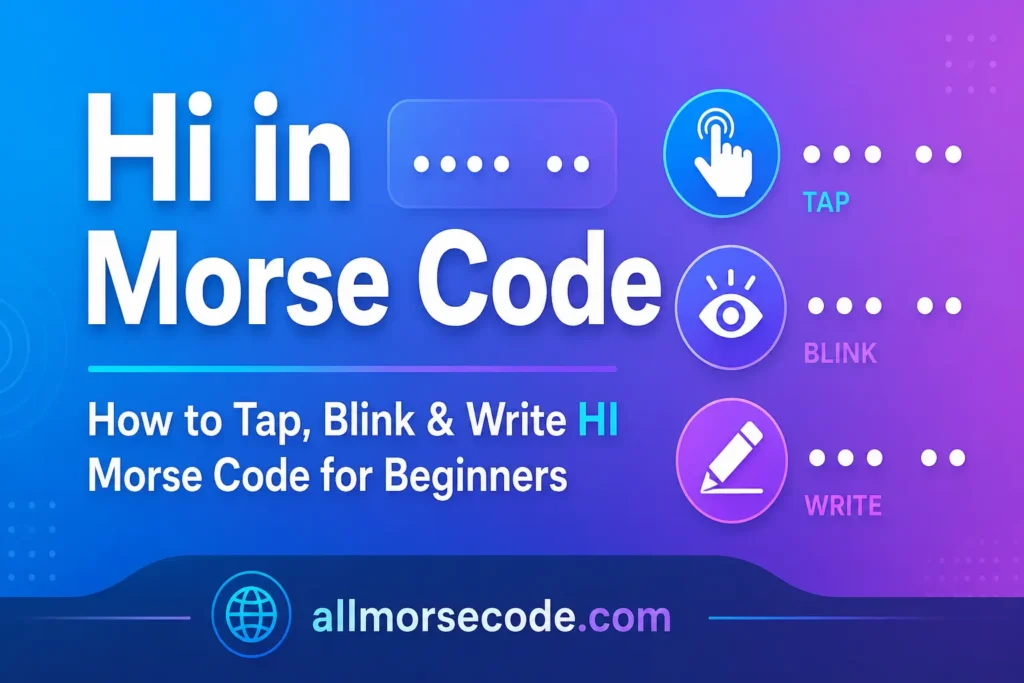
“Hi” in Morse code is:
H = ….
I = ..
Combined:
···· ··
Audio:
Dit-dit-dit-dit dit-dit
Light/Taps:
4 quick flashes or taps, short pause, then 2 quick flashes or taps.
[ez-toc]
“Hi” in Morse code is:
H = ....
I = ..
Hi = …. ..
Each dot represents a short Morse signal called a “dit.” Since both letters only use dots and no dashes, “hi” is considered one of the easiest beginner Morse code greetings.
The letter breakdown is:
- H = four short dots (….)
- I = two short dots (..)
Combined together, the Morse code for “hi” becomes:
···· ··
If you are still learning Morse symbols or common beginner words, you can also explore easy Morse code words for more beginner-friendly examples. Use our free Morse code translator to convert any word instantly. New to Morse? Read our guide on what is Morse code.
To write “hi” correctly in Morse code:
H = ….
I = ..
Combined:
…. ..
The space between the two letter groups is important because it separates H from I. Without spacing, Morse code can become difficult to read.
Most people use:
when typing Morse code online.
H =....
I = ..
Hi = …. ..
This formatting works well for:
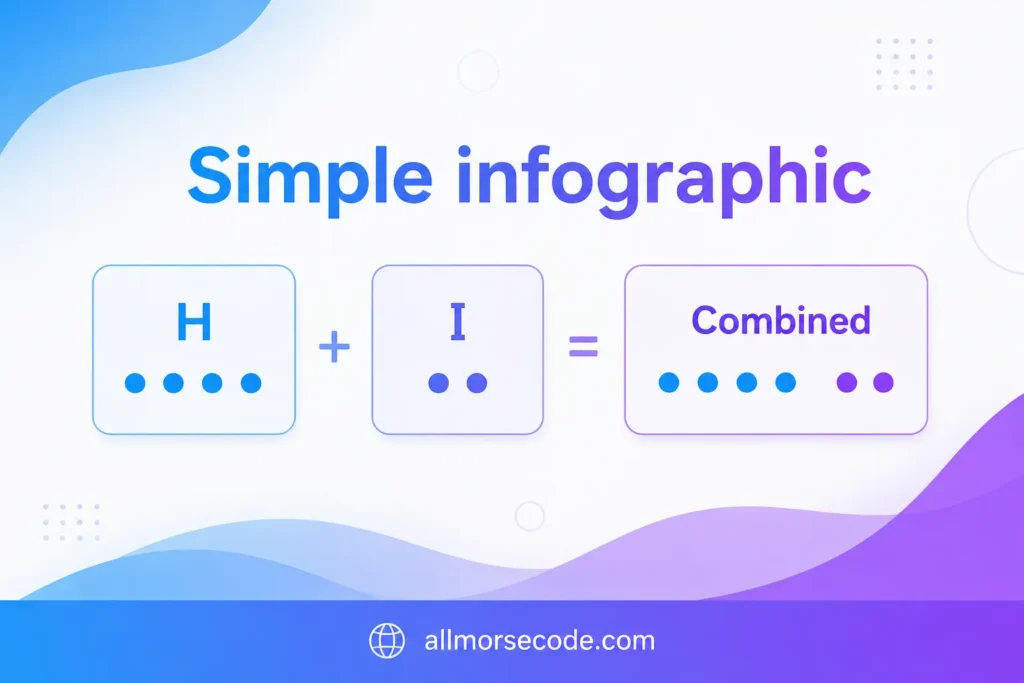
In Morse code, “Hi” is:
…. ..
Breakdown:
- H =
.... - I =
..
So when you combine them:
Hi = …. ..
When spoken out loud, Morse code uses sound patterns called “dits” and “dahs.”
Because “hi” contains only dots, it sounds like:
Dit-dit-dit-dit dit-dit
The rhythm matters more than speed. The four dots for H should stay together, followed by a short pause before the two dots for I.
Beginners often rush the pauses, but Morse timing is what makes letters recognizable. Keeping a small gap between letters helps listeners understand the message correctly.
You can send “hi” by tapping on a table, wall, or any surface
Action | Morse Meaning |
|---|---|
Tap Tap Tap Tap | H |
Short Pause | Letter Separator |
Tap Tap | I |
Here’s the rhythm:
Tap Tap Tap Tap
(short pause)
Tap Tap
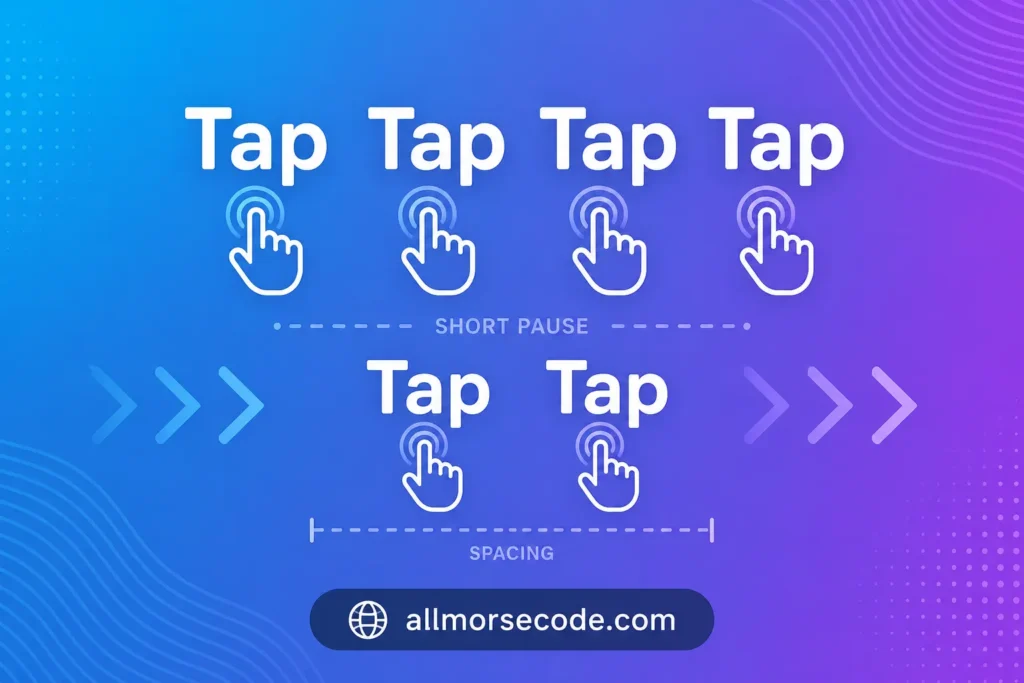
The first four quick taps represent H. After a brief pause, the final two taps represent I.
A good beginner trick is:
- keep all taps short,
- use equal rhythm,
- and pause slightly between letters.
This is one reason “hi” is often recommended in beginner Morse code phrase practice
Morse code can also be sent visually using light flashes.
To blink “hi”:
Flash Flash Flash Flash
(short pause)
Flash Flash

This method is commonly used in:
While “hi” is a casual greeting, the most famous emergency signal is SOS Morse code which is recognized worldwide.
To hear hi as a real audio signal, try our Morse code audio translator for live microphone and audio file decoding.
Some Roblox players use Morse code during:
In Roblox Morse code, “hi” stays exactly the same:
…. ..
Because it’s short and easy to memorize, it’s one of the most common Morse greetings used in gaming communities.
You can also scan Morse patterns from screenshots using our Morse code image translator.
“Hi” is considered beginner-friendly because:
Quick Beginner Tips
Many Morse learners start with:
before moving to harder phrases.
If you want more simple beginner examples, check out common Morse code words .
Morse code depends heavily on timing.
Signal Type | Timing |
|---|---|
Dot (Dit) | Short signal |
Dash (Dah) | 3x longer than a dot |
Pause Between Letters | Short gap |
Pause Between Words | Longer gap |
For “hi”:
A simple beginner rhythm looks like this:
H = dit dit dit dit
(short pause)
I = dit dit
Most beginners understand Morse faster once they focus on rhythm instead of memorizing symbols mechanically.

Steve Johnson
Founder of AllMorseCode.com and creator of educational Morse code resources used by learners worldwide. Specializes in Morse code translation, signal encoding concepts, communication history, and practical learning methods. Publishes in-depth guides, reference materials, and interactive tools that make Morse code simple, accurate, and accessible for students, amateur radio enthusiasts, emergency preparedness learners, and everyday users.